Who invented candlesticks?
Rice traders in Japan, almost 300 years ago, and how the idea reached the rest of the world.
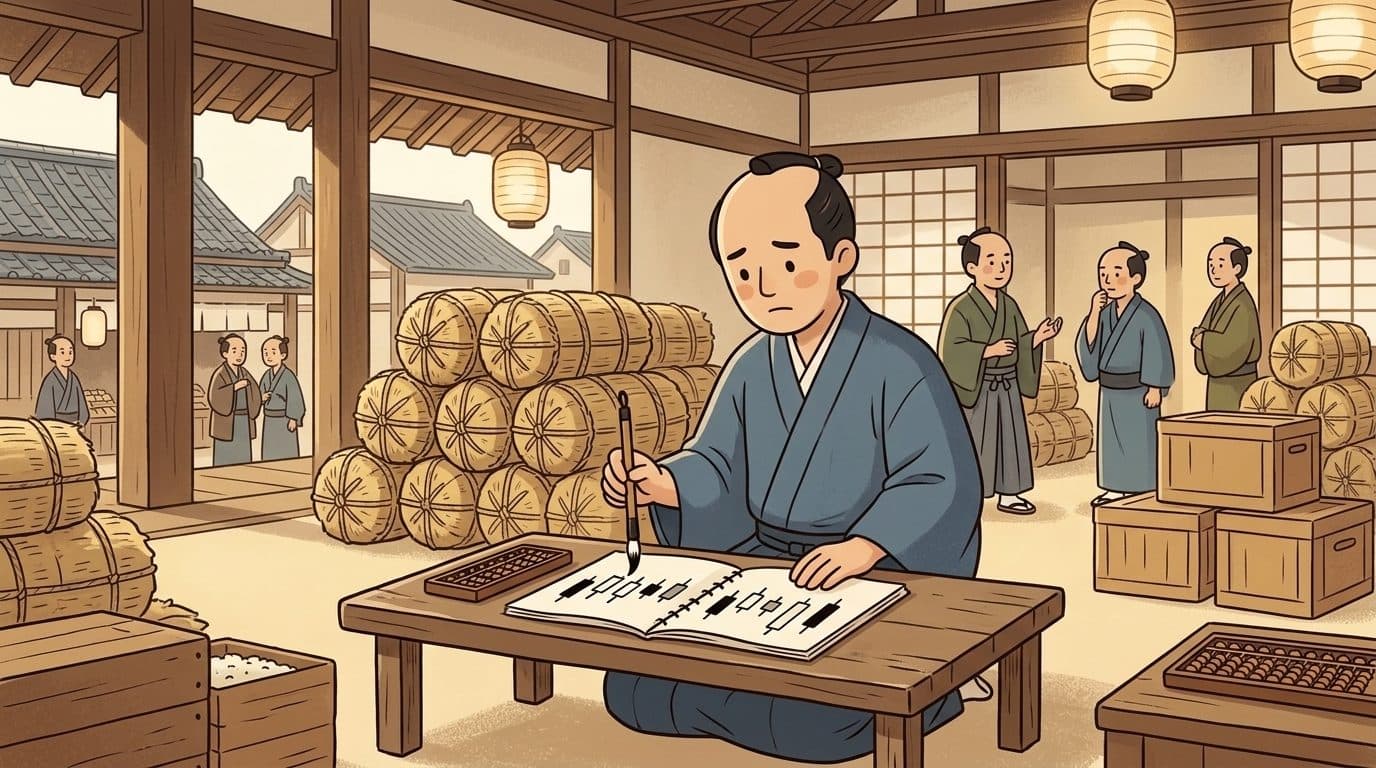
Rice was money
In Japan in the 1700s, rice was so important that people's wealth and even their pay was counted in rice. In the city of Osaka, merchants bought and sold rice at the , one of the first organized markets in the world. They even traded promises for rice that hadn't been harvested yet.
The rice trader who studied the crowd
The person most stories credit is Munehisa Homma (around 1724 to 1803), a rice merchant from the town of Sakata. He kept careful records of rice prices for years and noticed something big:
Prices weren't moved only by how much rice there was. They were moved by people's feelings. When traders got scared, they sold too much. When they got greedy, they bought too much.
Homma used his price records and his read on the crowd's mood to trade, and he became one of the richest men in Japan. Over time, Japanese traders drew prices as the candle shapes we use today. Historians still argue about exactly who drew the first one, but the idea came from these rice markets.
How it reached the rest of us
For a long time, candlesticks were mostly used in Japan. In the West, traders used bar charts and line charts.
That changed in 1991, when an American trader named Steve Nison wrote a book called Japanese Candlestick Charting Techniques. It explained candles in English, and soon traders everywhere were using them. Today almost every trading app shows candles by default.
Why this story matters
Homma's big idea is still true: charts show people's feelings. Fear and greed leave footprints, and candles are how we see them.
Remember
- Candlesticks came from rice traders in Japan in the 1700s.
- Munehisa Homma is the trader most often credited.
- Steve Nison brought candles to the rest of the world in 1991.
- Big idea: prices move because of people's feelings, not just facts.
Check yourself
1. What were people trading when candlesticks were invented?
2. What did Munehisa Homma notice moves prices?
3. Who brought candlesticks to Western traders in 1991?
Next lesson: Timeframes: zooming in and out
Money Tree School is education, not financial advice. Examples use made-up or historical numbers to show how things work; they are not recommendations to buy or sell anything. Markets can lose money.