Who trades, and when?
Regular people, banks, farmers and companies all trade, and each market keeps its own hours.
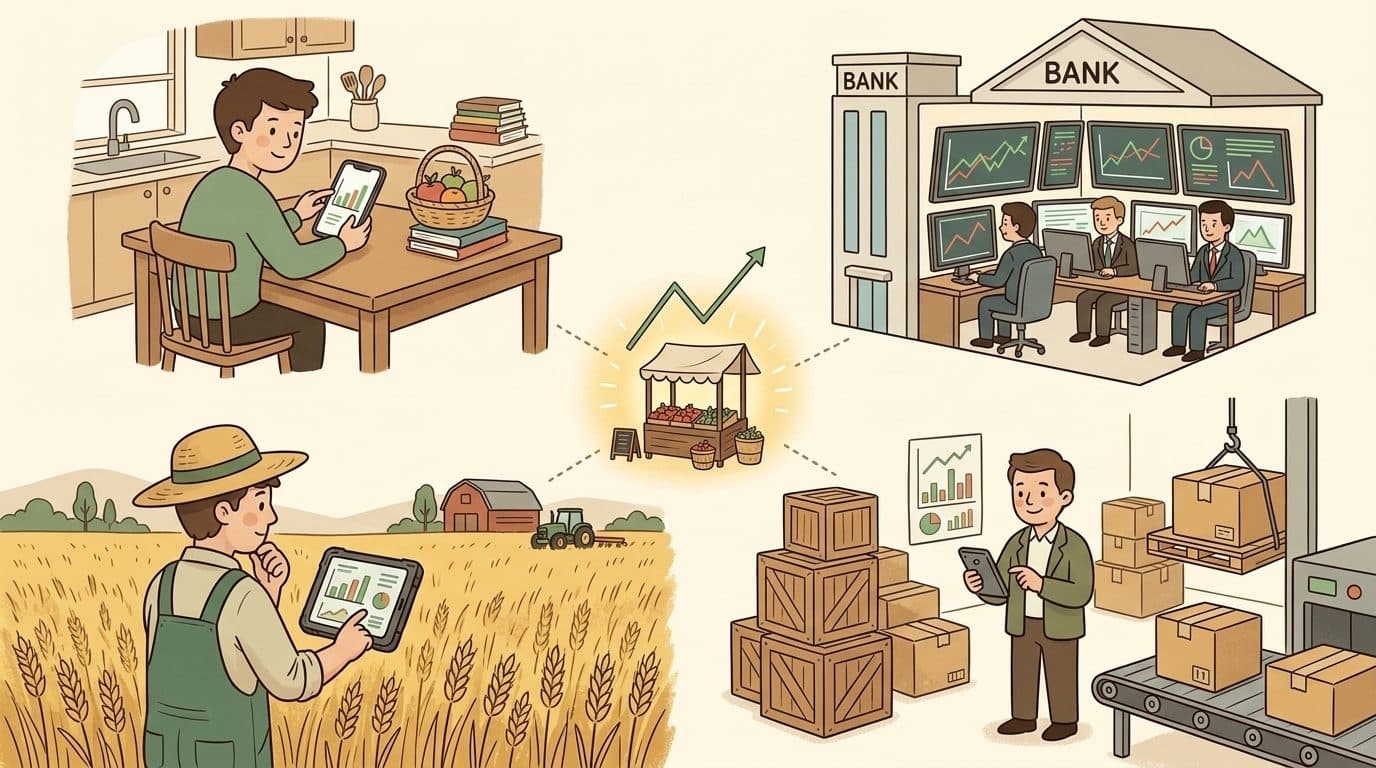
Who is on the other side of your trade?
When you buy, someone else sells to you. Who are these people?
- Regular people trading from a phone or laptop at home.
- Big banks and funds with huge amounts of money and teams of traders.
- Farmers and companies protecting themselves. A farmer might use to lock in a price for their wheat before harvest, so a price crash can't ruin them.
- Computers. A lot of trades today are made by computer programs that follow rules.
The big players move the most money. That's why later in this school you'll learn to spot what they are doing.
When are markets open?
Different markets keep different hours (times below are New York time):
- US stock market: Monday to Friday, 9:30 am to 4:00 pm. Closed on weekends and some holidays.
- US futures: almost 24 hours a day, from Sunday evening to Friday afternoon, with a short break each day.
- Forex: 24 hours a day, Monday to Friday, because when one country is asleep another is awake.
- Crypto: never closes. 24 hours a day, 7 days a week.
The busiest times, with the biggest moves, are usually when a market first opens and when big countries' working days overlap.
Remember
- Regular people, big banks, farmers, companies and computers all trade.
- Stocks trade weekdays 9:30 to 4:00 New York time.
- Futures and forex trade almost all day on weekdays. Crypto never stops.
Check yourself
1. Why might a farmer use futures?
2. When does the US stock market open on a weekday?
3. Which market never closes?
You finished Seed! Next up, Level 2: What is a price chart?
Money Tree School is education, not financial advice. Examples use made-up or historical numbers to show how things work; they are not recommendations to buy or sell anything. Markets can lose money.