What money is
Money is a tool for trading your time for things you need, and it slowly loses value.
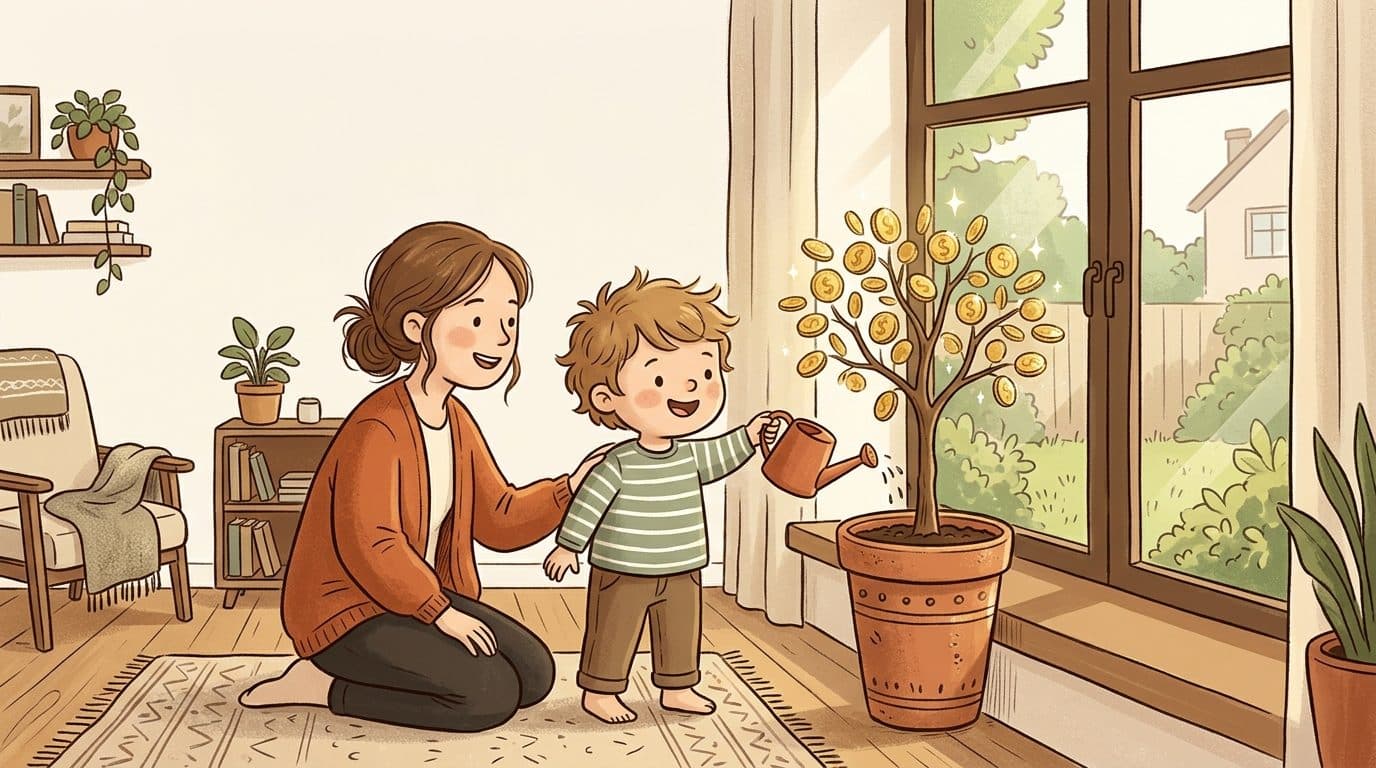
Money is a tool
Long ago, people traded things directly: eggs for bread, a day of work for shoes. That gets hard fast. What if the baker doesn't want eggs?
Money fixes that. It's something everyone agrees to take, so you can trade your work for money, then trade the money for anything else. Money does three jobs:
- A way to pay. Everyone takes it.
- A way to measure. A bike costs $200 and a book costs $20, so the bike is worth ten books.
- A way to save. You can earn it today and spend it next month.
Where money comes from
Most people get money by trading their time. You work an hour, you get paid for that hour. But there are only 24 hours in a day.
This school teaches a second way: money that works for you, even while you sleep. That's the money tree.
Money slowly shrinks
Prices go up a little almost every year. That's called . If prices rise 3% a year, $100 in a drawer buys only about $74 worth of today's stuff after 10 years.
Money that just sits still slowly loses power. That's the first reason we plant it.
Remember
- Money is a tool for trading your time for what you need.
- You can earn by trading your time, or by having money work for you.
- Inflation makes money in a drawer worth a little less every year.
Check yourself
1. Which of these is NOT one of money's jobs?
2. What is inflation?
3. With 3% inflation, $100 in a drawer for 10 years buys about how much of today's stuff?
Next lesson: Save first, spend second
Money Tree School is education, not financial advice. Examples use made-up or historical numbers to show how things work; they are not recommendations to buy or sell anything. Markets can lose money.